Trump takes a tough stance on movies, imposing a 100% tariff on non-American productions.
Created on 2025.05.09
1. Impose a 100% tariff on imported films
The President of the United States, Trump, always manages to surprise people.
Recently, there are reports indicating that Trump posted on the social media platform "Truth Social" stating that due to American filmmakers and studios gradually "leaving the United States," the American film industry is "rapidly declining," which has severely impacted Hollywood, and local jobs are also accelerating their loss, posing a "national security threat" to the United States.
In order to "once again have American-made films," Trump decided to authorize the U.S. Department of Commerce and the U.S. Trade Representative to immediately initiate procedures to impose a 100% tariff on all films produced abroad and entering the United States.

Trump imposes 100% tariff on imported films Source: BBC
Despite the grandiose reasons, anyone with a discerning eye can see that this is just an escalation of Trump's "America First" trade protectionism. From steel, automobiles, and low-priced goods to now cultural products, Trump's tariff stick has always been a routine.
However, the American people, who are suffering greatly from tariffs, seem to be unconvinced. William Reinsch, a former senior official at the U.S. Department of Commerce and a senior fellow at the Center for Strategic and International Studies, bluntly stated that Trump's claim that foreign-made films pose a "national security threat" is too far-fetched to be convincing. Moreover, imposing tariffs on foreign-made films is likely to trigger a chain reaction; if other countries or regions impose retaliatory film tariffs, it would deal a devastating blow to the American film industry. "What we lose far exceeds what we gain."
The American media outlet The New York Times also openly opposes Trump's film tariffs, believing that this policy is likely to backfire and harm American films. Currently, many large American film companies choose to shoot or conduct post-production overseas to reduce film production costs. The new tariffs will lead to an increase in production costs for American films, damaging their global competitiveness.
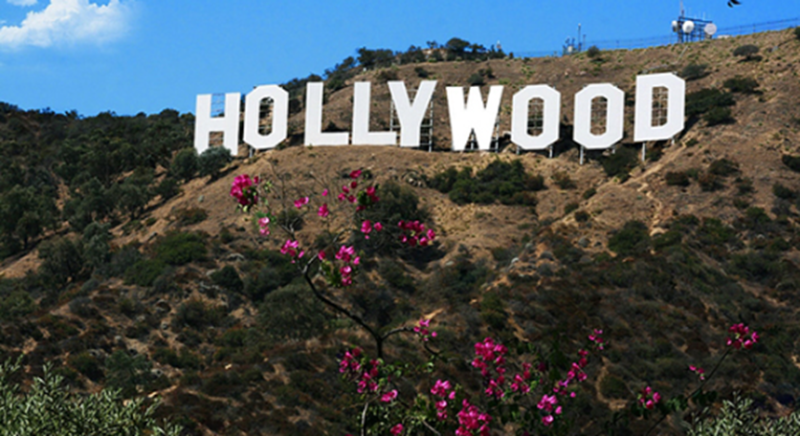
Hollywood Logo Image Source: WTCF
In fact, this is true. Currently, Hollywood has several blockbuster films being shot in various locations around the world, including the production cost of over 400 million dollars for "Mission: Impossible 8 - Dead Reckoning," the collaboration between Disney and 20th Century Studios for "Avatar: The Way of Water," and the spin-off of Lionsgate's hit "John Wick." It is worth mentioning that Marvel's "Avengers 5" has also started filming in London.

Mission: Impossible 8 Poster Image Source: Facebook
If all non-American films are subject to a 100% tariff, then the budgets of the aforementioned big-budget films will undoubtedly soar, forcing producers to cut costs, reduce the scale of filming, or even cancel certain projects, ultimately affecting the quality of American-made films.
2. It will only have the opposite effect.
Behind Trump's high-profile tax increase this time is, in fact, a desperate struggle of a cornered beast under the gradually declining American cultural hegemony system.
American culture has long occupied a high ground in global cultural output, with Hollywood movies thriving in the past few decades, strongly harvesting global box office revenues and becoming an important pillar of the American cultural industry. However, with the evolution of the industry, the vitality of domestic American films has significantly declined.
According to data from the nonprofit organization FilmLA, which tracks production in the area, the volume of film and television production in Los Angeles has decreased by nearly 40% over the past decade. Another piece of data indicates that North American box office revenue fell to its lowest level since 1996 (excluding the pandemic period) in the first quarter of 2025, with the annual forecast revised down from $9.7 billion to $9.5 billion.

The U.S. e-commerce industry is declining. Source: Arise News
To delve into the reasons behind the weak box office performance and market contraction of Hollywood films, it is certainly related to countries like Canada, the UK, and Australia attracting the outflow of American film products through tax incentives and lower labor costs, but more importantly, it can be attributed to the decline of American films' global influence.
On one hand, Hollywood heavily relies on classic IPs such as "The Avengers" and "Fast & Furious." In the top ten box office in China for 2023-2024, almost all Hollywood films are sequels or spin-offs of classic IPs, lacking innovation; on the other hand, the local film industries in markets like China, Japan, and South Korea are rapidly rising. "Ne Zha" has topped the global animated film box office chart, while the Japanese animated film "Suzume" and the South Korean historical political film "Seoul Spring" have also received both critical acclaim and box office success, challenging Hollywood's global dominance.

Nezha 2 tops the global animated film box office chart. Image source: CCTV
It is evident that the decline of Hollywood is a structural issue, with roots that extend far beyond the simple category of industrial transfer. Trump's desire to promote the accelerated development of the American film industry through violent tariff imposition will only exacerbate Hollywood's imbalance in content innovation, cost control, and global collaboration.
It is worth mentioning that the tariff wall built by Trump in other areas is also having a negative impact on Hollywood films.
Recently, due to the United States' excessive imposition of tariffs on China, a spokesperson for the National Film Administration believes that this action will inevitably weaken domestic audiences' favorability towards American films, and stated that they will follow market rules and moderately reduce the import quantity of American films. Following this news, the stock prices of several American film companies fell sharply, with Walt Disney and Warner Bros. Discovery's stock prices dropping by 6.79% and 12.53% respectively on the same day.

The stock prices of several American film companies have declined. Source: CCTV
In summary, relying solely on strong intervention through tariffs, while it can curb the "Hollywood exodus," will not have much positive effect on the healthy development of the American film industry in the long run. If Trump insists on this course of action, it is likely to fail in protection and instead become "self-harm."
Contact
Leave your information and we will contact you.


