Walmart US crazy logistics, 3-hour home delivery
Created on 2025.04.30
1. The scope of logistics services is further expanded
Upholding the principle of "there is no fastest, only faster," Walmart continues to make efforts in the logistics field.
Recently, Walmart President and CEO Doug McMillon stated in his annual letter to shareholders that Walmart is leveraging its new technology and extensive store network to expand its rapid delivery coverage across the United States, aiming to provide delivery services to 95% of Americans within 3 hours by the end of this year.
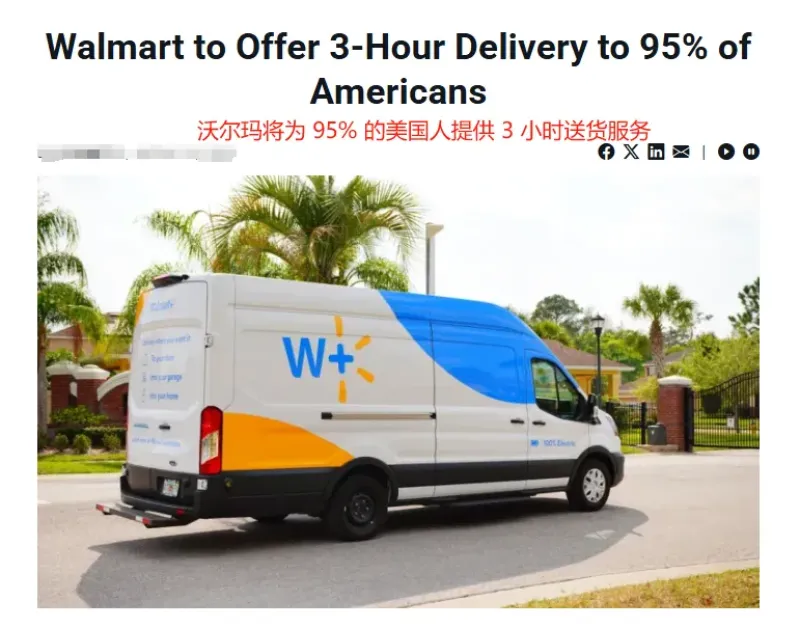
Expand the range of fast delivery Source: PYMNTS
Specifically, Walmart will increase its investment in supply chain technology, no longer using postal codes to determine coverage areas, but instead dividing regions into hexagonal grids, which include real-time data such as store capacity, delivery times, and customer demand. It is expected that over 12 million American households will benefit from efficient delivery services.
This supply chain automation helps improve inventory liquidity, optimize personalized experiences, and reduce monotonous repetitive operations to enhance overall operational efficiency. Walmart U.S. CEO John Furner pointed out that in-store self-fulfillment orders, about one-third of shoppers choose to pay a certain fee to receive their goods within 3 hours or less.
In terms of stores, Walmart plans to renovate more than 650 stores across the United States this year, achieving store automation through better product display methods, expanding online pickup and delivery services, and offering more products. Among them, Texas has the highest number of store renovations, reaching 67, followed by California with 56.

Transforming multiple stores in the United States Image source: PYMNTS
According to the latest financial report released by Walmart, as of January 31, 2025, the company's e-commerce sales reached $121 billion, with the number of items delivered on the same day or the next day reaching 8.3 billion, highlighting the importance of logistics for its development.
Intensifying logistics construction and expanding service scope can not only improve delivery efficiency but also reduce delivery costs. According to Walmart, in the third quarter of last year, the net delivery cost per order for Walmart's U.S. operations decreased by approximately 40%, marking the third consecutive quarter of reduced delivery costs for Walmart.

Walmart delivery cost decline Source: RETAIL DIVE
As for the reasons behind the continuous decline in delivery costs, Walmart mentioned three points: the delivery network, paid orders, and supply chain automation. For example, the number of stores providing delivery services increased from 4,200 to 4,500, the penetration rate of paid expedited delivery services has improved, and over 50% of orders are automated.
It is foreseeable that as Walmart continues to optimize its logistics services, the benefits brought in the future will only increase.
2. The logistics field has found a worthy opponent.
Since we are talking about Walmart accelerating its logistics construction, we cannot avoid the competitor Amazon. However, unlike Walmart's reliance on the advantages of physical stores, Amazon is stronger in e-commerce, and its efficient delivery service is a trump card in its hand.
Amazon's official disclosed data shows that in 2024, Amazon's delivery speed has once again set a record, with the company achieving same-day or next-day delivery of over 9 billion items. Global Prime members saved nearly $95 billion through fast, free shipping.

Speed reaches a new high Image source: aboutamazon
This is mainly due to the rapid expansion of same-day delivery sites, with the number of same-day delivery sites in the United States increasing by over 60% in the past year, covering more than 140 metropolitan areas. Additionally, Amazon has also divided its operations and transportation network into smaller, more serviceable areas, optimizing the supply chain network.
In fact, as early as February last year, Amazon planned to focus on improving inventory layout, accelerating delivery speed, and reducing transportation costs. Some common measures include increasing the use of robots and equipping delivery vehicles with AI package retrieval systems. Since then, there have been continuous actions, such as deploying new delivery fleets and expanding same-day delivery coverage.
It is worth noting that the logistics battle between Amazon and Walmart has also shifted from the ground to the sky.
According to data released by Walmart, as of now, Walmart has completed 120,000 drone deliveries, most of which come from its testing in the Dallas-Fort Worth area, with fast-moving consumer goods such as groceries, food, and pharmaceuticals being delivered within 15 minutes. According to Walmart's plan, this year it will continue to expand the coverage of drone deliveries, which is part of the company's ultra-fast delivery service.

Expand the range of drone delivery Source: dronelife
On the Amazon side, the drone delivery program has not slowed down its development pace at all. In December last year, Amazon's latest delivery drone, the MK30, was officially put into operation in Arizona. Although it faces regulatory and cost-related obstacles, its spokesperson pointed out that this delivery service is very useful for consumers ordering everyday essentials such as medications, baby supplies, and pet food.
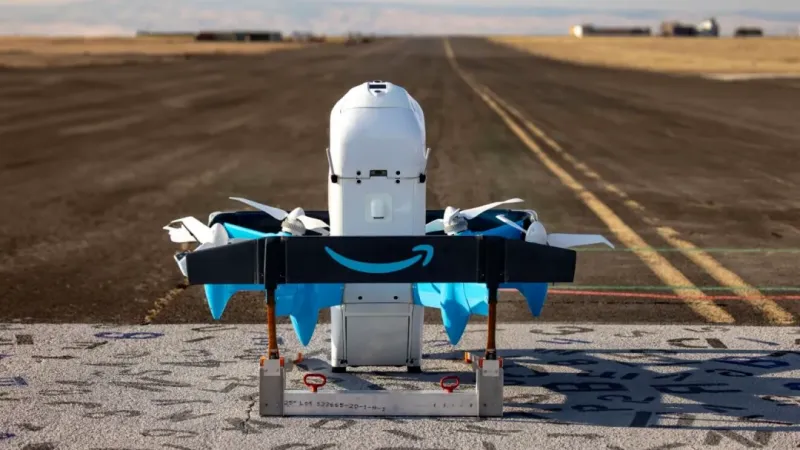
Amazon's new delivery drone Source: aboutamazon
In summary, whether it is Walmart or Amazon, they are continuously investing in the logistics field to provide users with more efficient delivery services. In this logistics battle, whoever can integrate resources well and leverage their own advantages will be better able to adapt to market demands and enhance retail competitiveness.
Contact
Leave your information and we will contact you.


